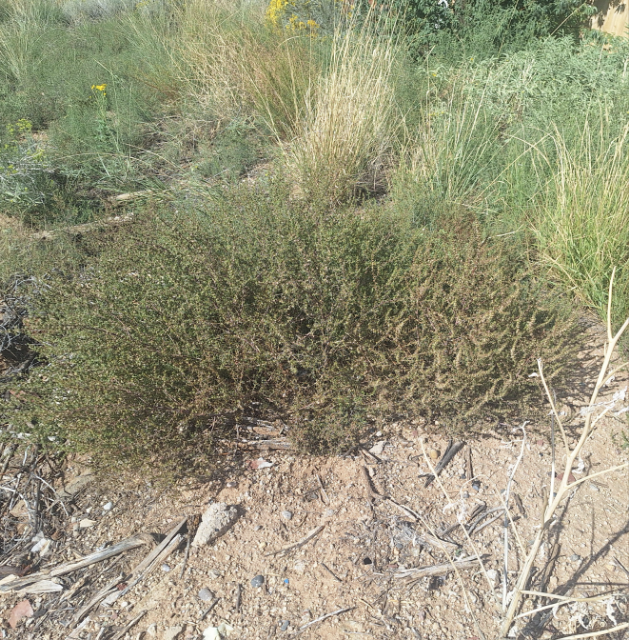
Dead trees can send embers a mile or more, and those embers are the most likely way a wildfire would spread throughout our community. Since dead trees release far more embers than live ones, removing them is one of the most effective ways to reduce wildfire risk. Embers land on roofs, in wood trim, leaf piles, and dry brush like chamisa and, yes, those tumbleweeds.
Tumbleweeds release up to 250,000 seeds and can roll for miles! They germinate between April and August and go to seed August through November. After the first frost, they die, break off, and start tumbling—so now is the time to remove them. Even worse, tumbleweed seeds can remain viable for up to two years—so removing this year’s plants helps reduce next year’s crop as well.
Removal Tips:
- Wear gloves and use a hoe or pull by the base.
- Use a tarp or plastic sheet to catch seeds.
- Bag and dispose—do not compost.
- For large infestations, consider a landscape service or goats; herbicides are a last resort.
Tumbleweeds and dead trees add to wildfire danger and detract from neighborhood beauty. Our community covenants ask every homeowner to help keep Sandia Heights safe, attractive, and wildfire-ready.